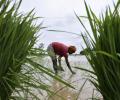
As the growth figures relate to pre-Covid lockdown period it does not reflect the real picture of distress which unfolded from April onwards in the sector, when acute supply disruption led to sharp drop in prices of many commodities largely perishables impacting farmers.

The locusts initially entered Rajasthan from Pakistan and from there the swarms moved towards Madhya Pradesh, Haryana, and Punjab over the last few weeks and are now threatening to enter Uttar Pradesh, putting at risk the summer crop.

'I'm not surprised with what's happening in India,' 'Tiger' Tyagarajan tells Nivedita Mookerji.

'The spirit of cooperation between the Centre and states has been diluted in many ways.' 'The level of consultation which used to be there earlier has reduced significantly.'
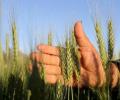
The government is looking at tweaking provisions of the Indian Contracts Act of 1872 to bring agreements between farmers and companies under its ambit, aiming to prevent exploitation of farm people.

'It's the brazen corruption involving politicians that makes you sit up years after the event,' notes Nivedita Mookerji after reading B K Syngal's Telecom Man.

Later, there may be some tax relief aimed at the middle class and measures to benefit the sectors worst hit by Covid-19 and the resultant nationwide lockdown.

In total, the Centre plans to purchase around 40.7 million tonnes of wheat from farmers this year, which is almost 19 per cent more than last year.
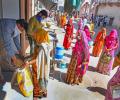
However, experts say that unless clear guidelines are there, it remains to be seen how many people fall within the ambit and who remains excluded.
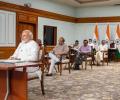
Nivedita Mookerji goes in search of the elusive war room to track and respond to the coronavirus threat.
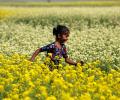
In MP, farmers say sales under new 'Sauda Patrak' method below MSP; Haryana mustard farmers wait for their turn to sell. The annual purchases of major rabi crops in North India largely wheat, mustard and also chana to some extent have been delayed as most cereal mandis were closed in the aftermath of the nationwide coronavirus lockdown.
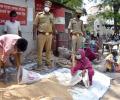
A recent study shows that more than 100 million people are excluded from the public distribution system because the central government insists on using 2011 population figures to calculate state-wise PDS coverage, which effectively leaves out 100 million people, reports Sanjeeb Mukherjee.
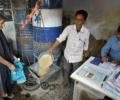
A study by eminent economists, by Jean Drze, Reetika Khera and Meghana Mungikar released few days back shows that more than 100 million people are excluded from the PDS because the central government insists on using 2011 population figures to calculate state-wise coverage under the National Food Security Act.

The stimulus package is expected anytime this week and will be aimed at the urban and rural poor; disadvantaged sections of society; MSMEs and some of the worst-affected sectors.
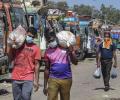
It is likely the government will divide the country into different zones during the proposed extended period of lockdown and might permit a few services to function in safe zones.
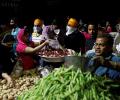
There have been several instances of traders dumping fruits and vegetables outside mandis. Or of farmers dumping produce outside their villages or feeding them to their animals.
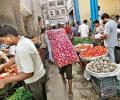
The agriculture ministry, in the last few weeks, issued guidelines and letters to states to ensure agriculture and food products reach consumers in a timely manner, while farmers don't have to come to the mandis to sell them.

A single format and simpler, uniform rules would have kept the service going. In other parts of the world including in the US, managing demand and capacities along with ensuring preventive measures were an issue, but there was hardly any administrative hurdle anywhere.
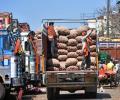
In the last one week several companies have had to face the hurdle of making a distinction between what's essential and what's not. To help them the government has now clarified that grocery would include hygiene products such as hand wash, soaps, disinfectants, body wash, shampoo, surface cleaners, detergents, tissue paper, toothpaste, oral care, sanitary pads, diapers, chargers and battery cells, etc.

IMD has said the temperature in April-June across most parts in India is expected to be 0.5-1 degrees Celsius warmer than normal. However, doctors and scientists say they haven't found any direct correlation between the speed of COVID-19 spread and warm weather.
 © 2026 Rediff.com - Investor Information - Advertise with us - Disclaimer - Privacy Policy - Sitemap - Feedback - About us - Terms of use - Grievances